


Five Aspects of the Silverado 1500 & 2500 That Showcase Their Similarities and Differences
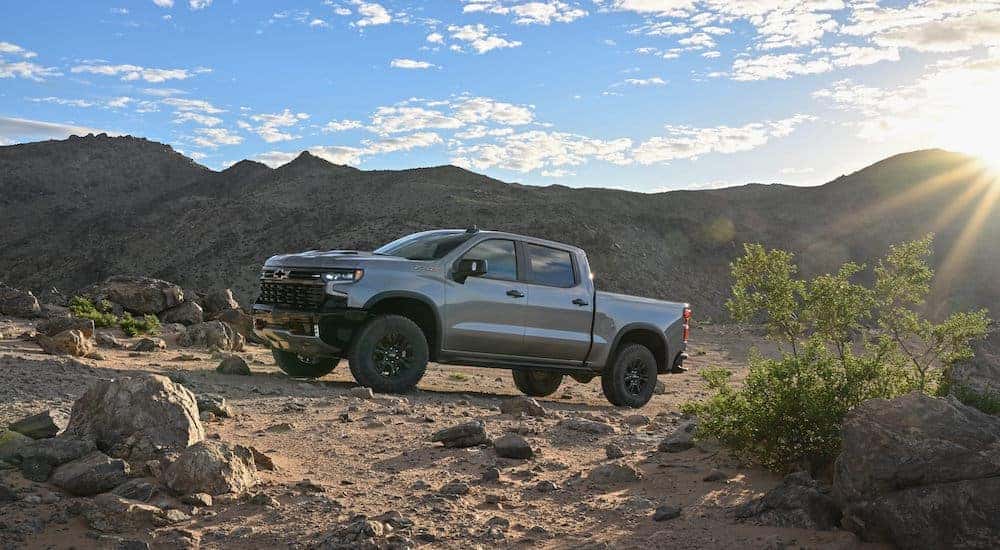
If you’re looking for a capable truck that you can rely on day after day to get you and your cargo where you need to go, whether that’s a few blocks down the street, many miles down the highway, or even off the paved path, then the Silverado should be at the top of your list. When you find a Chevy Silverado for sale, you find a versatile and well-built truck that’s truly ready for just about anything. The only question is: which Silverado is right for you?
The Silverado 1500 is a light-duty full-size truck that’s affordable and has a wide variety of trims, powertrains, and other configurations available. This option is fine for most drivers, but what if you want more power to put toward towing a massive trailer or hauling a heavy load in the cargo bed? In that case, you can consider upgrading to a Silverado HD. The HD lineup starts with the Silverado 2500 HD, which strikes a great balance between affordability and power.
If you’re on the fence deciding between the 1500 and 2500 HD, you’ve come to the right place. These trucks have a lot in common, but they have differences that go beyond simple numbers on a spec sheet. In this guide, we’re going to take a look at five categories that do a good job of highlighting how these full-size models differ and what they have in common, so you have the information you need to pick the 2024 Silverado that’s right for you.
#1 – Maximum Capacities
We’ll get the main difference out of the way up front because it really is the only thing that matters for some drivers: maximum towing and hauling capacities. You might prefer the Chevy Silverado 1500‘s low price, standard features, or trim lineup, but none of that matters if you absolutely, positively need to tow more than 13,300 lbs. Ditto if you need to haul more than 2,260 lbs of payload. Whether you use your vehicle for work or have a luxury camping trailer that’s your main motivation for buying a truck, there are times when a light-duty truck, even a particularly capable one, just won’t cut it.
Heavy-duty trucks are designed to handle much heavier loads, whether you’re hitching them up in the back or loading them into the cargo bed. The 2500 HD is the least powerful model in the Silverado HD lineup, but it’s still clear, looking at its specs, that it’s in a whole different category from the 1500. Opt for the diesel engine and the right configuration, and you can tow up to 22,430 lbs. The gas engine unlocks the top payload figure of 3,689 lbs. These figures aren’t quite double those of the 1500, but they come awfully close. If your main concern is towing or hauling and you’re not sure if the 1500 will be future-proof as your needs change, then it can definitely be the right call to upgrade to the 2500 HD.
#2 – Powertrain Lineup
Some of the differences in power come from how the bodies of the trucks are constructed, but of course, a lot of it has to do with what’s under the hood. So, let’s take a look at the engine lineup for each of these Silverados. The 1500 has twice as many options since it caters to a wider range of drivers. Some need to do a solid amount of towing or hauling, but others are looking for a budget work truck that’s affordable above all else, and still others are off-road enthusiasts who care more about thrilling driving dynamics than getting the highest possible towing capacity.
The base powertrain of the Silverado 1500 is a 2.7L TurboMax turbocharged I-4 engine that pairs with an 8-speed automatic transmission and produces up to 310 hp and 430 lb-ft of torque. While this configuration offers the lowest maximum towing capacity in the lineup at 9,500 lbs, it has the highest payload capacity: 2,260 lbs. A more powerful 5.3L EcoTec3 V8 comes standard on the LTZ and High Country trims and is an available upgrade on several others. This one (like all the other engines in the lineup) pairs with a 10-speed transmission for a smoother ride and produces up to 355 hp and 383 lb-ft of torque, allowing for up to 11,300 lbs or towing or 2,180 lbs of payload.
The 6.2L EcoTec3 V8 is an available upgrade for several trims and produces up to 420 hp and 460 lb-ft of torque to deliver a 13,300-lb towing capacity and a 1,980-lb payload capacity. Finally, there’s the 3.0L Duramax turbo-diesel I-6, which is standard on the off-road ZR2 trim and available on several others. While it has the lowest horsepower at 305 hp, it has the highest torque at 495 lb-ft, allowing it to deliver up to 13,300 lbs of towing and 1,970 lbs of payload. This one is also the most fuel-efficient option in the lineup, offering up to 29 MPG on the highway when paired with RWD.
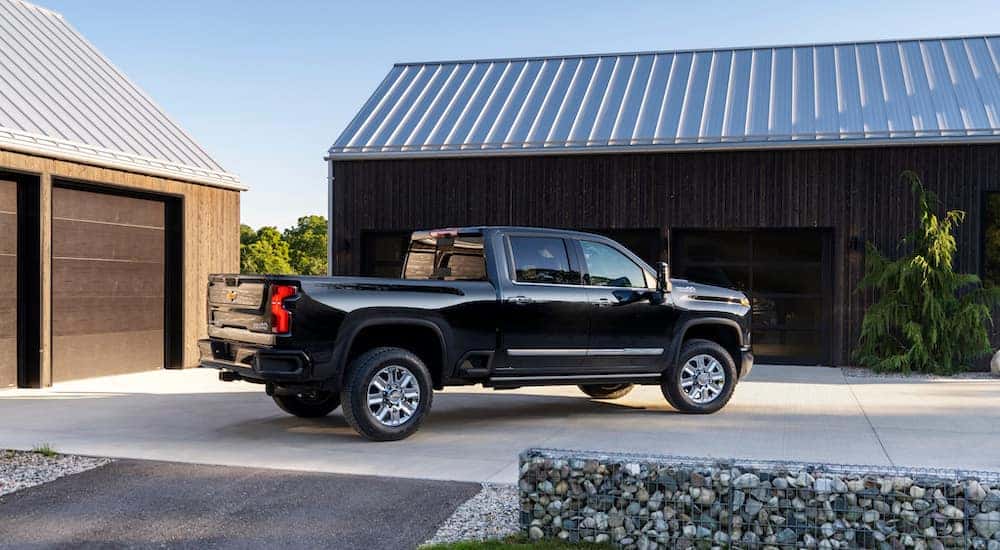
The Chevy Silverado 2500 HD‘s powertrain lineup is much simpler and basically comes down to one question: Gas or diesel? Both pair with an Allison 10-speed automatic transmission and offer plenty of muscle. The 6.6L V8 gas engine is the standard powertrain, and it produces up to 401 hp and 464 lb-ft of torque. With this V8 under the hood of a properly configured trim, you can haul up to 3,689 lbs of payload or tow up to 18,700 lbs. However, to get the highest capacities, you need to upgrade to the 6.6L Duramax turbo-diesel V8, which ups the power to 470 hp and a whopping 975 lb-ft of torque. This setup lets you haul up to 3,615 lbs of payload or tow up to 22,430 lbs.
#3 – Trim Levels
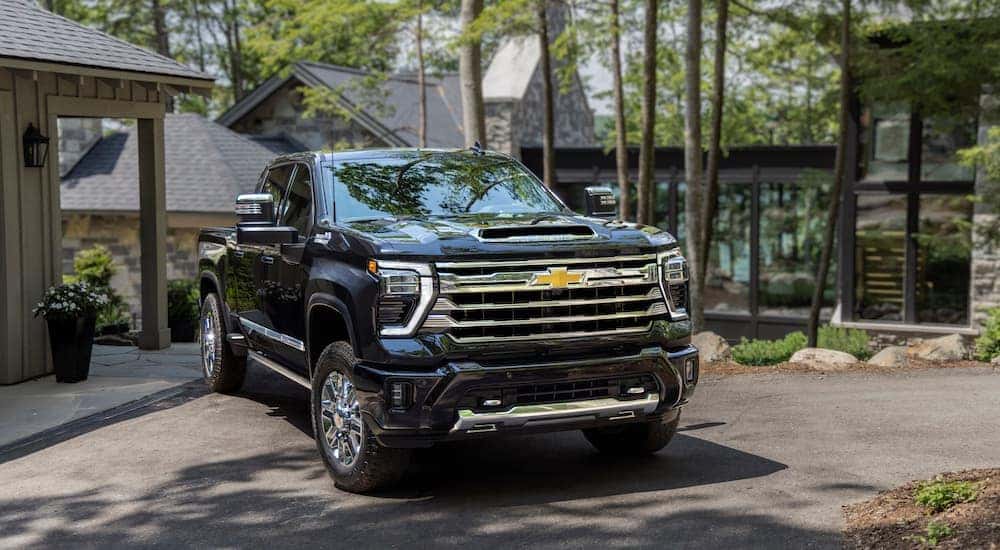
In model years past, the 1500 and 2500 have offered very different trim lineups. Recently, though, there’s been a trend of automakers offering their beefiest off-road trims not just on midsize or light-duty trucks but on heavy-duty models as well. That means that the highly capable ZR2 trim is available on both trucks. Things look pretty similar for lower-tier trims, too: both the 1500 and the 2500 HD offer an entry-level WT (Work Truck) trim that covers the basics without adding on too many bells and whistles, an upgraded Custom trim that offers a few extra goodies without raising the price too much, and an LT trim that has better tech and a side of style. At the higher end, the ZR2 is joined by the high-end LTZ and the all-out luxurious High Country.
That’s the entire lineup for the 2500 HD. The 1500, on the other hand, has a few extra choices to let you find exactly the right balance between the price tag and included features. The Custom Trail Boss and LT Trail Boss offer varying degrees of off-road capability for those who don’t quite need the beastly ZR2, while the RST is a stylish trim designed for sporty on-road driving.
#4 – Other Configurations
Trim levels aren’t the only way to customize your Chevy truck. There are also different cab styles and bed lengths to choose from. The Silverado 1500 has a 5.8′ short bed, a 6.6′ regular bed, and an 8.2′ long bed, while the 2500 has no short bed option, a slightly longer 6.9′ regular bed, and a similar 8.2′ long bed. Both trucks let you choose between a regular cab (two doors), a double cab (four doors), or a roomy crew cab (four doors) on select trims.
#5 – Tech
Looking at the tech onboard the 1500 and 2500, you’ll find more similarities than differences. Both Silverados come standard with a basic infotainment setup with a 7-inch touchscreen but offer a more advanced system with a 13.4-inch screen on higher trims. Both offer peace of mind with standard driver assist features like Forward Collision Alert, Automatic Emergency Braking, Front Pedestrian Braking, Lane Departure Warning, and a Following Distance Indicator, as well as other high-tech safety features like StabiliTrak electronic stability control with traction control, a tire pressure monitoring system, and Teen Driver. Even more high-tech features are available on higher trims or can be added to some lower trims on both trucks, giving you access to HD Surround Vision, Trailer Side Blind Zone Alert, Front and Rear Park Assist, and more.
0 comment(s) so far on Five Aspects of the Silverado 1500 & 2500 That Showcase Their Similarities and Differences