


Should You Get a 4×4 Truck? Here’s What You Should Consider

You’ve probably heard the term from time to time: a 4×4 truck. But what does that really mean? To a novice, 4×4 might sound like a lumber measurement, something you find strolling the isles of a hardware store. But in the pickup truck world, the term 4×4 refers to a powertrain system in which the truck operates by evenly distributing power to all four wheels. It’s sometimes labeled 4×4 or four-wheel drive (4WD), and when you’re dealing with cars and trucks, there are four total options: front-wheel drive, all-wheel drive, rear-wheel drive, and four-wheel drive. Each is designed for its own unique set of functions, and not every vehicle benefits from every drive system. If you’re in the process of shopping for a new truck, you may be wondering, “Should I get a 4×4 truck?” You should get a 4×4 truck if you regularly travel through difficult driving conditions like snow or off-road terrain.
When presented with this inquiry, it’s helpful to learn how exactly a 4×4 drive system will help you. That way, before you end up at your nearest truck dealership, you’re armed with key information. In this article, we’ll explore the various needs solved by 4×4 trucks and why you should or shouldn’t invest in one. And if you’re ready to take the leap into the 4×4 world and are asking yourself, “Is there a truck dealership near me?” look no further than Ruge’s Chevrolet. We invite you to come in today, and our friendly and knowledgeable sales team will be more than happy to walk you through all of your 4×4 truck options and help you find the perfect model that fits your unique needs.
The Functions of a 4×4 Vehicle
Before we dive into whether this drive system is for you, let’s explore what it does in general. The 4×4, or 4WD, was designed to distribute power evenly from your engine to your wheels. Your engine creates the power, which travels through a network of components in the drivetrain, then is delivered to your wheels. If the vehicle has front-wheel drive, that power is distributed directly to the front axle.
A rear-wheel drive system operates with power directed exclusively to the rear axle, and all-wheel drive systems receive power to both the front and rear axles simultaneously. Finally, a four-wheel drive, or 4×4 system, sends power to each individual wheel, maximizing control. Within this system, a driveshaft transfers torque from the engine to all four wheels without limiting the front or rear differential.
A 4×4 drivetrain system is by far the best for handling a variety of terrains and conditions. While other systems like FWD, AWD, and RWD are effective for city driving and most country roads, nothing beats the concentration of a 4WD system. If you live in an area that experiences heavy rainfall or snowfall, the 4×4 system performs the best when it comes to gripping the road, no matter what. This also goes for off-roading. The grip factor of a 4×4 helps in scenarios when your truck is traversing over mud, dirt, and uneven pavement. It can be advantageous in wet conditions when one or more of your tires isn’t connecting as it should.
When you’re researching a specific pickup truck and coming across numerical figures such as tow capacity and payload, the 4×4 powertrain model is the one that gets the maximum of both. Drivers who depend on a truck’s ability to haul significant weight will benefit from the highest available payload and towing capacity that their vehicle has to offer. If you work in construction, landscaping, delivery, or any other field that requires a lot of transportation of heavy cargo, you want a a vehicle from a new or used truck dealer that will make your work easier and more efficient.
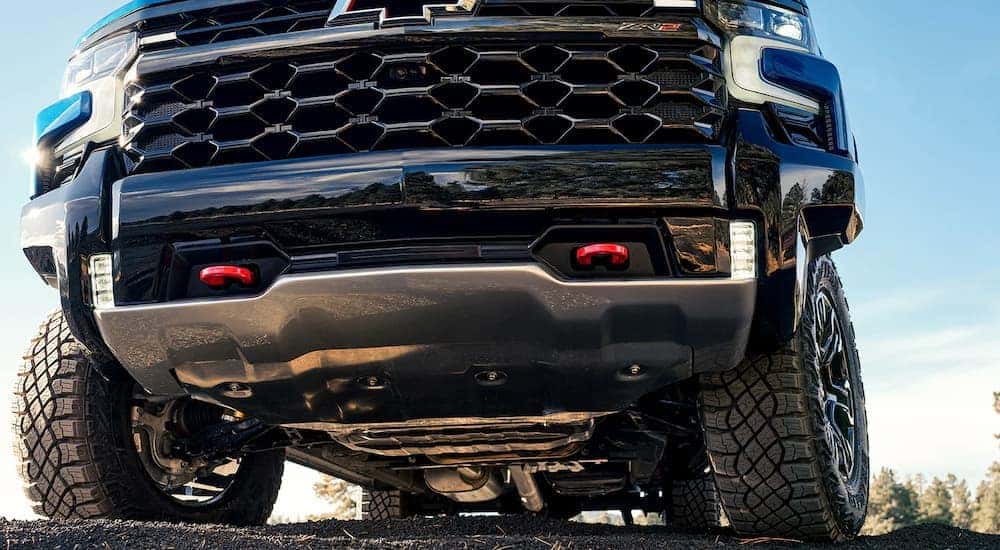
Part-Time vs. Full-Time 4WD
Many trucks are designed with part-time and full-time 4WD. Depending on the year, make, and transmission of your vehicle, you can have a button or lever within the control panel of your cabin that alternates between part-time and full-time 4WD. Having this lever or button means you have to engage it or set it to “on” before the vehicle can benefit from power being distributed equally to all the wheels. This function allows the driver to control when they need the 4WD system and is helpful when a driver finds themselves in low-grip conditions or at higher risk for slippage.
Most of today’s modern pickup trucks offer an automatic setting that can look like “4A or Auto.” The automatic setting vehicles are generally marketed as having full-time or permanent 4WD and don’t require active engagement by the driver. Some of today’s trucks with permanent 4×4 include the Chevrolet Silverado 1500 and the Toyota Tundra. Within the Silverado, there is a feature called Autotrac 2-speed transfer case with settings for 2-Hi, 4-Hi, 4-Lo, and Auto. Older trucks with part-time 4WD need active engagement or disengagement to efficiently operate the system.
Four-Wheel Drive vs. All-Wheel Drive
It’s easy to confuse 4×4 with all-wheel drive since the two systems are close in name. While they sound similar, these names are not, in fact, interchangeable. The key difference between AWD and 4WD is a transfer case and driver-activated low-range setting. With both of these systems, there is a different default. Vehicles with AWD will default send power to the front wheels when all four aren’t needed. Meanwhile, a four-wheel drive system defaults by sending power to the rear axle. A system that is AWD works with less input by the driver. However, the downside is that the AWD system reduces off-roading and the ability to drive in low-grip settings due to the front-wheel default setting. The more slippery the conditions, the more you benefit from power delivery to all four wheels.
Consider the Pros and Cons
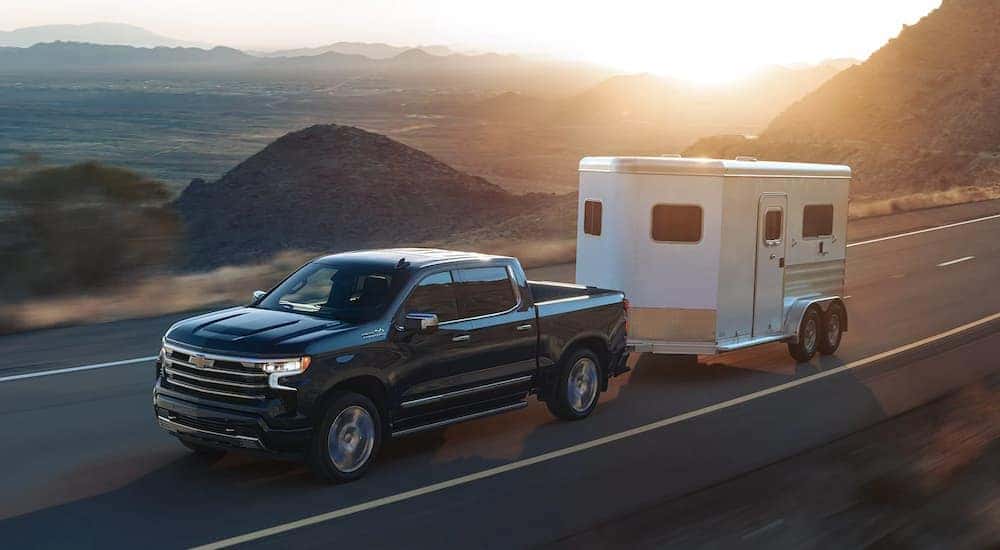
You may still be wondering if it’s worthwhile to spring for the 4×4. In most cases, the 4×4 option for the truck you’re scoping will sell for a markup compared to alternative systems for that model. The gas efficiency may be lower on a 4×4, while the cost of maintaining the vehicle may be higher. However, if you’re in the market for a truck that can improve your towing capacity in challenging conditions, you may benefit from springing for the 4×4. For example, if you regularly tow small boats and end up on slick inclines like a boat ramp, it would be helpful to have the engagement of all four wheels. This applies to driving on rocky inclines or steep dirt roads such as construction sites or campgrounds. While the con is the higher cost, the pro is the long-term benefit of having a vehicle that can take on more and give you the confidence to drive wherever you need to go.
A 4×4 Truck Offers Unparalleled Capability
As with anything, there are advantages and disadvantages to the 4×4 system. Drivers should take the time to determine their key needs and priorities. While a truck with a 4×4 drivetrain will likely cost more, it can reduce your expenses over time. For example, let’s say you haul tons of heavy cargo in difficult terrains. Over time, you will put more wear and tear on a vehicle that lacks 4×4 and can’t handle the stress. Drivers should recognize the abilities and limitations of whichever vehicle earns their investment.
The freedom of a 4×4 truck will open more opportunities and give you the peace of mind that your truck can work as hard as you do. Don’t let your truck hold you back when you can move forward in four-wheel drive. Still unsure about your options? At Ruge’s Chevrolet, we’re here for any questions you may have and offer some viable options based on your driving needs. Contact us today!
0 comment(s) so far on Should You Get a 4×4 Truck? Here’s What You Should Consider